A new generation of cruise travel
Cruising is no longer associated exclusively with slow-paced relaxation or retirement travel. Over the past decade, the cruise industry has undergone a structural shift, introducing ships and itineraries designed specifically for younger audiences.
These modern cruise experiences emphasize movement, interaction, and social engagement. Instead of passive sightseeing alone, they integrate sports, digital entertainment, nightlife, and group-based activities that encourage passengers to connect with one another.
The result is a hybrid environment: part vacation resort, part floating social network, and part adventure platform.
Why cruises appeal to younger travelers
Younger passengers typically prioritize experience density — the ability to do many different things in a short time. Cruises naturally support this model by combining accommodation, transport, entertainment, and dining in a single space.
Unlike traditional travel, there is no need to constantly repack, navigate airports, or plan logistics between destinations. This frees up time and energy for activities and social interaction.
Main attraction factors
- All-in-one travel structure (sleep, eat, explore in one place)
- High variety of daily activities
- Built-in social environment
- Access to multiple destinations without relocation stress
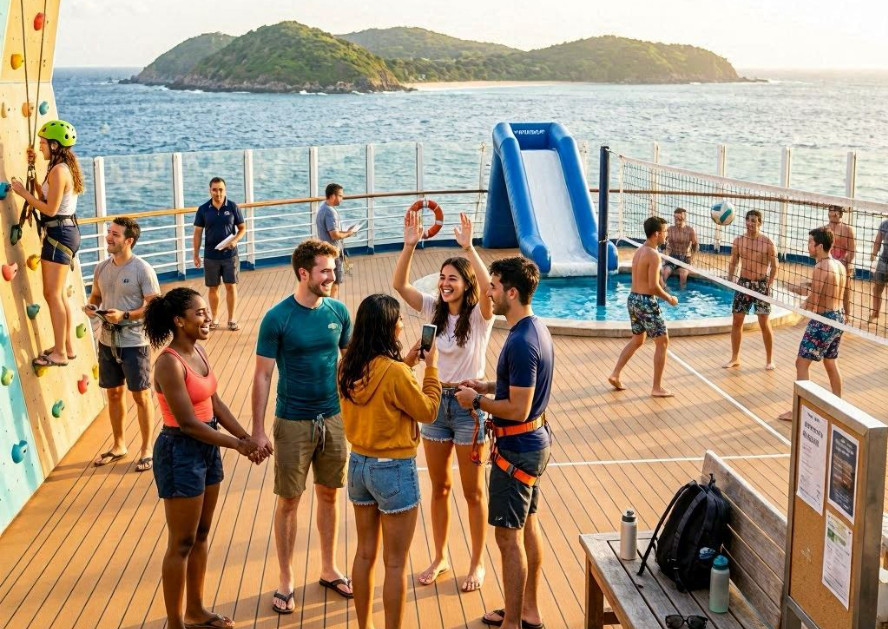
Active recreation on board
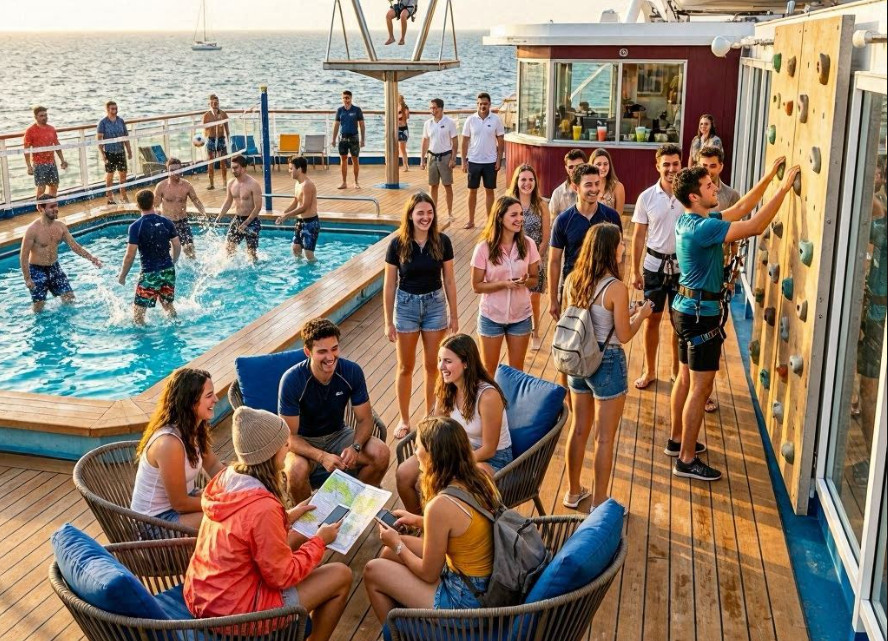
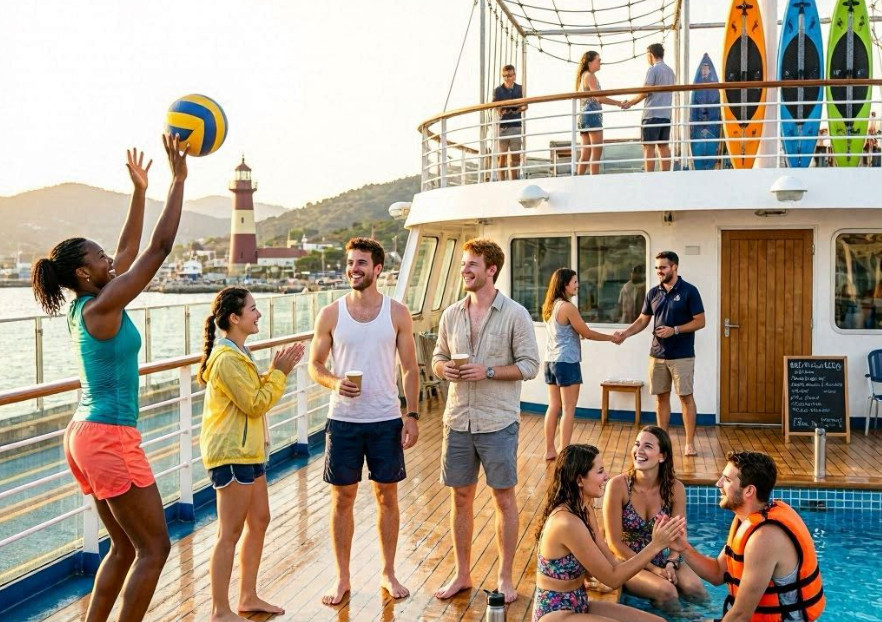
Modern cruise ships aimed at younger demographics are designed like floating activity parks. They incorporate physical, recreational, and skill-based experiences that go far beyond traditional deck lounging.
These activities are structured to be both individual and group-oriented, allowing passengers to engage at their own comfort level while still participating in a shared environment.
Common active recreation options
- Rock climbing walls and sport zones
- Surf simulators and water parks
- Basketball and multi-sport courts
- Fitness classes such as yoga, HIIT, and dance workouts
- Adventure-style obstacle courses
These features transform the ship into a dynamic recreational space where physical activity becomes part of daily routine rather than an optional add-on.
Social design: engineering friendships at sea
One of the most distinctive aspects of youth-oriented cruises is intentional social engineering. The layout, scheduling, and activity design all encourage interaction between passengers.
Shared experiences — such as team competitions, group excursions, and themed events — naturally reduce social barriers and make it easier to form connections.
Mechanisms that encourage social interaction
- Group-based excursions in ports of call
- Speed-friending and social mixers
- Themed parties and onboard festivals
- Shared dining tables and communal seating areas
These mechanisms replicate aspects of university life or hostel travel, but in a more structured and curated environment.
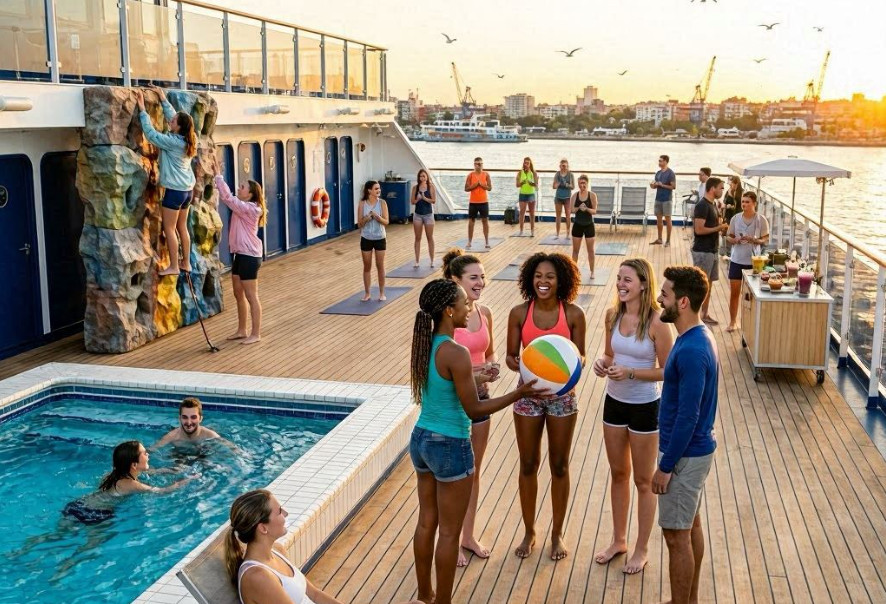
Nightlife and entertainment culture
Evening programming plays a central role in youth-focused cruises. After daytime activities, ships transition into entertainment hubs featuring music, performances, and nightlife spaces.
Popular articles
This creates a natural rhythm: active daytime engagement followed by social nighttime experiences.
Typical evening offerings
- Live DJ sets and themed dance parties
- Open-air cinema screenings
- Comedy shows and live performances
- Interactive game nights and quizzes
These experiences are designed to be inclusive rather than exclusive, allowing different social groups to overlap and interact naturally.
Technology and digital integration
Modern cruise ships rely heavily on digital platforms to enhance the passenger experience. Mobile applications and onboard networks help travelers coordinate activities, meet new people, and manage schedules.
Some systems even use algorithmic recommendations to suggest events or groups based on interests, making it easier to find like-minded passengers.
Digital features commonly used
- Onboard social networking apps
- Activity booking and scheduling tools
- Interest-based matchmaking for events
- Real-time notifications for activities
Exploration beyond the ship
While onboard life is central, cruises for young people also emphasize active exploration in port destinations. These stops are often curated around adventure, culture, and group experiences.
Instead of passive sightseeing tours, passengers may participate in hiking, water sports, urban exploration, or cultural workshops.
Examples of shore activities
- Kayaking and snorkeling excursions
- City scavenger hunts and exploration games
- Local cooking or craft workshops
- Beach sports and group competitions
The psychology of shared travel
Traveling in a closed yet dynamic environment accelerates social bonding. Shared experiences, especially those involving novelty or mild challenge, increase the likelihood of forming friendships.
Cruises amplify this effect by combining proximity, repetition of interaction, and structured group activities over multiple days.
Unlike short encounters in airports or hotels, cruise environments allow relationships to develop gradually throughout the journey.
Balancing freedom and structure
A key design challenge in youth cruises is balancing scheduled activities with personal freedom. Too much structure can feel restrictive, while too little can reduce social cohesion.
Successful cruise programs typically offer flexible participation: passengers can join activities spontaneously or follow a planned itinerary depending on preference.
Conclusion: travel as a social ecosystem
Cruises for young people represent a shift in how travel is conceptualized. Instead of simply moving between destinations, the journey itself becomes the primary experience.
Active recreation, digital integration, and structured social opportunities combine to create a floating ecosystem where friendships form naturally and experiences are densely packed.
In this model, the ship is no longer just transport — it is a temporary community designed for exploration, interaction, and shared memory creation.